S
SLEEP.NETGlobal Hub
Sleep ErgonomicsSleep Ergonomics

支撑的艺术:
脊椎力学与深度睡眠
The Art of Support:
Spinal Mechanics and Deep Sleep

探索科学原理
Core Theory

寻找“零压力”曲线Finding the "Zero-Pressure" Curve

人体脊椎在直立时呈现自然的“S”型曲线,但在平躺时,重力会拉直这一曲线,导致腰椎悬空或颈椎受压。 理想的睡眠支撑系统(Support System)并非越硬越好,而是能在不同睡姿下, 维持脊椎的中立位排列,即耳、肩、髋在一条直线上。When upright, the human spine forms a natural "S" curve, but when lying flat, gravity straightens this curve, leaving the lumbar region unsupported or compressing the cervical spine. The ideal Support System is not necessarily the firmest one, but one that, across different sleeping positions, maintains neutral spinal alignment, keeping the ear, shoulder and hip in a straight line.

图示 01. 脊椎自然曲度分析

01

颈椎 (Cervical)

需填补颈部与床面间的空隙,防止悬空造成的肌肉紧张。
02

腰椎 (Lumbar)

需要最强的向上支撑力,以抵消腹部和骨盆的重力下沉。
Sleep Positions

睡姿动力学分析Sleep Posture Dynamics Analysis

不同睡姿对承托层的压力分布需求完全不同Different sleeping positions place entirely different pressure-distribution demands on the support layer.

侧卧位

压力热点: 肩膀、髋部

支撑痛点: 肩宽导致颈部悬空高度大;髋部过宽易导致腰部扭曲。

推荐方案:

选择分区支撑床垫(肩部柔软下陷,腰部硬挺),搭配高支撑力波浪枕。

仰卧位

压力热点: 后脑勺、肩胛骨、骶骨、脚跟

支撑痛点: 腰椎下方易产生空隙(腰桥现象)。

推荐方案:

中等硬度床垫,重点关注腰部贴合度;枕头不宜过高,防止下巴压迫气道。

俯卧位

压力热点: 胸部、膝盖

支撑痛点: 颈椎被迫极度扭转,腰椎易过度后伸(塌腰)。

推荐方案:

不推荐睡姿。如无法改变,需使用极薄枕头或不用枕头,床垫需偏硬以防腹部下陷。

Material Physics

材料响应特性Material Response Characteristics

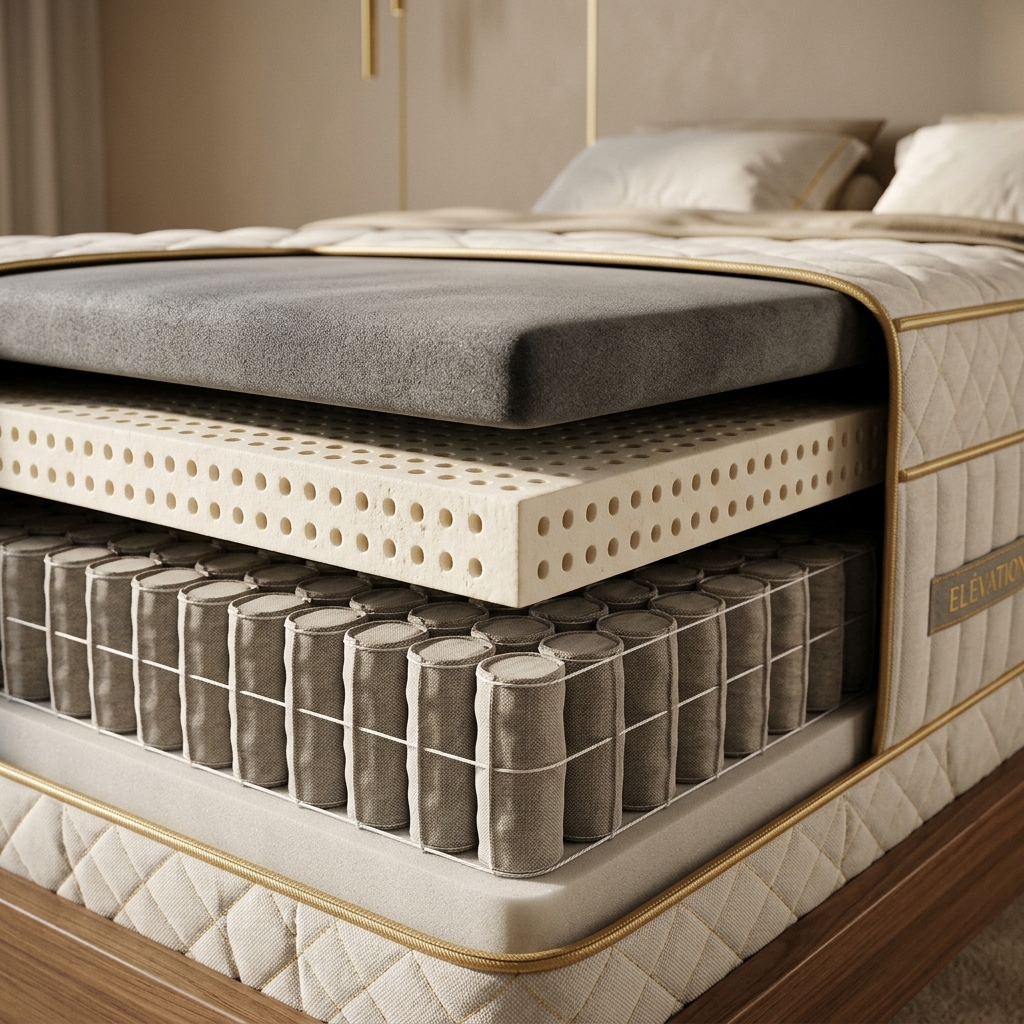
不同的回弹模量(Rebound Modulus)决定了身体与床垫的微观交互。 我们从物理学角度分析三种主流基材。Different Rebound Modulus values determine the micro-level interaction between the body and the mattress. Here we analyze three mainstream base materials from a physics perspective.

粘弹记忆棉 (Viscoelastic Foam)

特性:慢回弹,能够精确包裹身体轮廓,吸收震动。

适用:侧卧者,追求零压感,不想被伴侣翻身打扰的人群。

天然乳胶 (Natural Latex)

特性:高回弹(High Resilience),支撑力强,透气性好,防螨。

适用:仰卧者,易出汗体质,喜欢Q弹支撑感的人群。

独立袋装弹簧 (Pocket Springs)

特性:点对点支撑,通过弹簧线径变化实现精准分区。

适用:大体重人群,腰部需要强力支撑者。
Material Detail
Smart Algorithm

枕头高度计算器

基于您的肩宽与睡眠习惯,通过人体工学算法为您推荐最佳枕头高度。

推荐受压后支撑绝对高度

-- 厘米 (cm)